What Tellby is
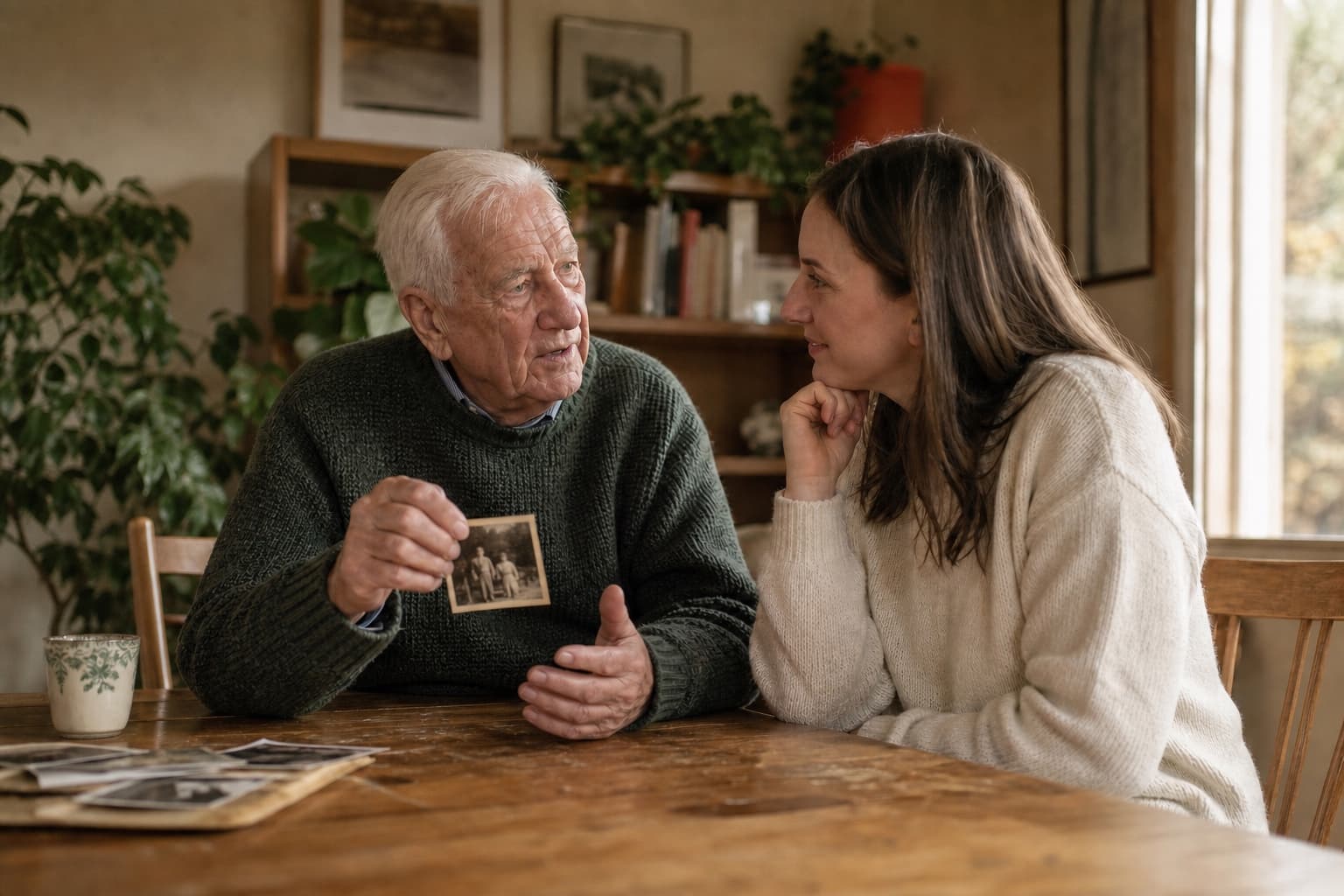
You set things up for a parent or grandparent. From there, the storyteller just talks. Tellby asks one warm question at a time, listens to the answer and follows up when there is more to say.
Each conversation becomes a memory card with their words and their original recording. Nothing is shared with the wider family until the organiser has read it and approved it.
Why I built Tellby
I kept coming back to a simple thought: we usually realise what we wanted to ask when it is already too late.
It is rarely the big facts that bother me. We tend to know where someone grew up, what job they did or who they married.
It is the smaller things.
What their mum was like. What they did on Friday nights. The trouble they got into. The holidays they still laugh about. How they met someone. What scared them. The stories they have told a hundred times and the ones nobody thought to ask about.
And even when we remember the story, we lose something else: their voice.
The laugh halfway through. The pause while they remember. The way they tell it. The little details that would probably disappear from a written family history.
I wanted to make something that could help my own family keep more of that.
Not by sitting someone down with a long list of questions or asking them to write their life story. Just by giving them space to talk, one story at a time, while something quietly listens and knows when to ask the next question.
That became Tellby.
The aim is not to create a perfect record of a life. It is to keep enough of the person that, years from now, their family can still hear them in it.
A few things I care about
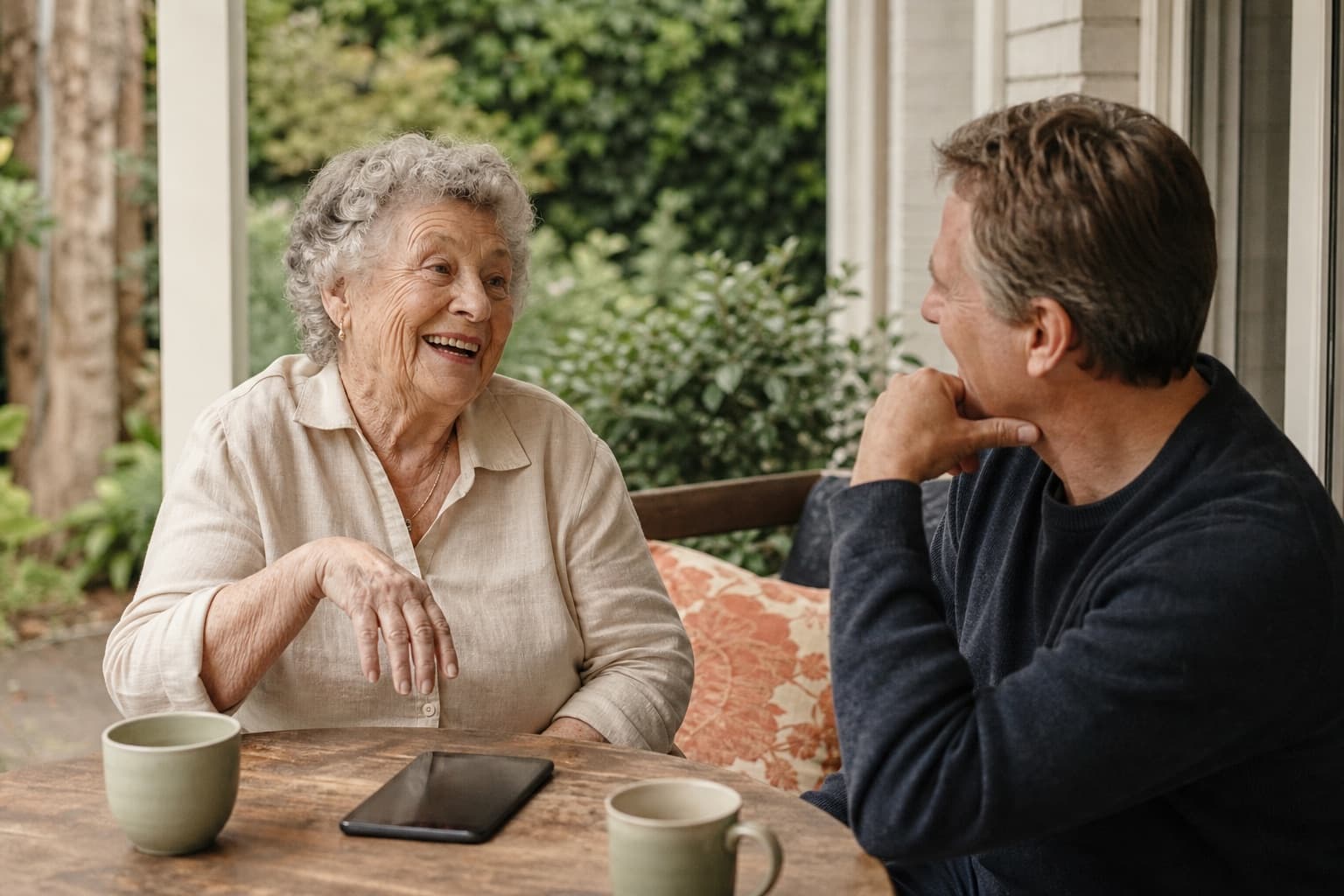
The person telling the stories should never feel like they have homework.
The urgency belongs to the rest of us. Tellby will not nag someone, count streaks or make a missed week feel like failure.
I also do not want Tellby turning real memories into polished little biographies. A story with pauses, tangents and laughter is often better than the cleaned-up version.
So the original voice stays.
What we promise
- Nothing is shared without approval. The family only sees stories that the organiser has approved. That rule is enforced in the database, rather than being just another setting.
- Some subjects stay private. If a storyteller says a subject is off-limits, Tellby will not ask about it again. It will not try another wording later.
- The original recording is kept. We preserve the real voice, including the pauses, laughs and moments between the words.
- The storyteller gets the final say. Memory is messy. Names, dates and details can be wrong. Every memory card can be corrected by the person who lived it. Their correction matters more than anything Tellby thinks it heard.
Where Tellby is today
Tellby is still young.
Anyone can start today. Answer a few quick questions for a parent or older relative, or for yourself, and the first conversation is free. If you would rather talk it through with me first, you can apply for the guided pilot instead, while I work out what deserves to stay, what needs fixing and what should never be added.
I would rather grow slowly and keep these promises than grow quickly and weaken them.
Who is behind Tellby
Tellby is built and run by Richard Simms in Melbourne, Victoria, Australia.
It is a small, independent product. There is no large team behind it and no plan to turn family memories into an advertising business.
I am building the thing I would want my own family to be able to trust.
Contact
Questions about Tellby: [email protected].
Privacy or data requests: [email protected].
You can also read our contact page for full business details, or our privacy policy for more information about how recordings and stories are handled.
Service version 0.1.609 · built 12 October 2026