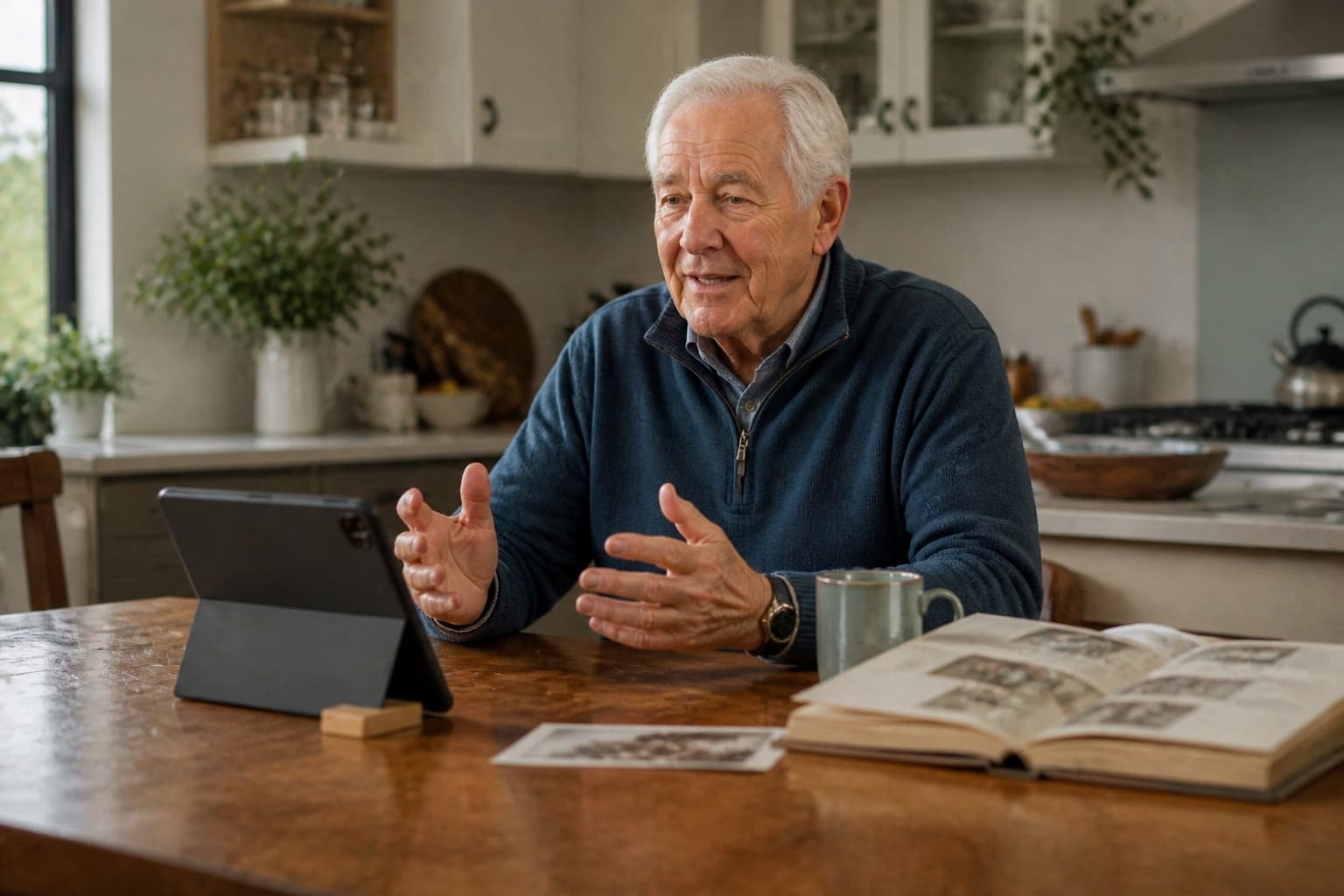
A memoir can sound like a large piece of work. Tellby approaches it differently: begin with one memory you care about and tell it by speaking. You do not need polished dates, perfect sentences or a plan for your whole life.
Before a story session
The waitlist provides contact permission only. Tellby asks for your name, email and permission to contact you—never the story itself. If we later invite you to research, we explain what the session will do, what will be recorded, who may handle it and what choices you keep. Recording starts only after a separate, clear yes.
You can arrive without notes. It may help to think of one small doorway into a memory: a kitchen, a first job, a journey, a person who changed your mind, or a day that still makes you laugh. You decide which door to open.
During the conversation
Tellby's current pilot begins with a calm 10–15 minute voice conversation. It asks one question at a time and may ask a gentle follow-up about a detail you mentioned. There is no score, no requirement to remember every date and no need to speak in chronological order.
You can skip any question, pause, or stop. If a topic should never be raised again, the current product also supports a permanent topic boundary. Silence is not treated as permission.
After you finish speaking
In the current pilot, the recording and transcript are used to prepare a short written story while the original voice remains the source. The product also extracts supporting people, places and events so later conversations can connect details without inventing new facts.
The aim is a readable draft kept with the original voice. In the invited-family pilot, the organiser reads and approves the card before the wider family sees it. The direct-storyteller path on this page is still an interest test, so its exact account and sharing flow will be explained before anyone is invited to record.
You stay in charge
- Topic choice: you choose what to tell and what to leave alone.
- Recording choice: contact permission is not recording consent.
- Conversation control: you can skip a question, pause or stop. A draft is not a final authority over your memory.
- Sharing: joining the list shares no story. In the current invited pilot, nothing reaches the wider family automatically.
- Stopping: you can stop a conversation or decline a later invitation.
Who can see and process a story?
The research-list form goes only to the Tellby pilot team through our email provider. It contains contact details, not story content. If a later session is offered, Tellby explains its recording and processing boundary before asking for consent. The current service uses specialist providers for voice conversation, transcripts, story preparation, storage, email and recovery; the full list is in the privacy policy.
In the current invited-family pilot, the pilot team may use a recording and transcript to prepare a draft. The organiser reads and approves the card before the wider family sees it, and nothing reaches the wider family automatically. Because the direct path is still being tested, Tellby will describe any different sharing roles before a direct participant agrees to record.
Frequently asked questions
Do I need a family invitation to express interest?
No. You can join Tellby's direct storyteller research list yourself. The list is an interest test, not a self-serve account or a booked story session, and Tellby will explain any later research invitation separately.
How long does a first Tellby conversation take?
The current pilot starts with about 10–15 minutes. A short first conversation is easier to begin and leaves you free to decide whether you want another one later.
What happens to the recording and transcript?
If you separately consent to a research session, Tellby uses the recording and transcript to prepare the story material described before that session. The privacy policy explains the service providers involved, storage, retention and deletion choices.
Who can see a story?
Joining the research list shares no story with anyone. In Tellby's current invited-family pilot, the pilot team may prepare the draft and the wider family does not see a story automatically. Any direct-storyteller research flow and sharing choices will be explained before separate recording consent.
Can I skip a question or stop?
Yes. In a Tellby conversation you can skip a question without explaining why, pause, or stop. A research invitation should never turn your interest into an obligation.