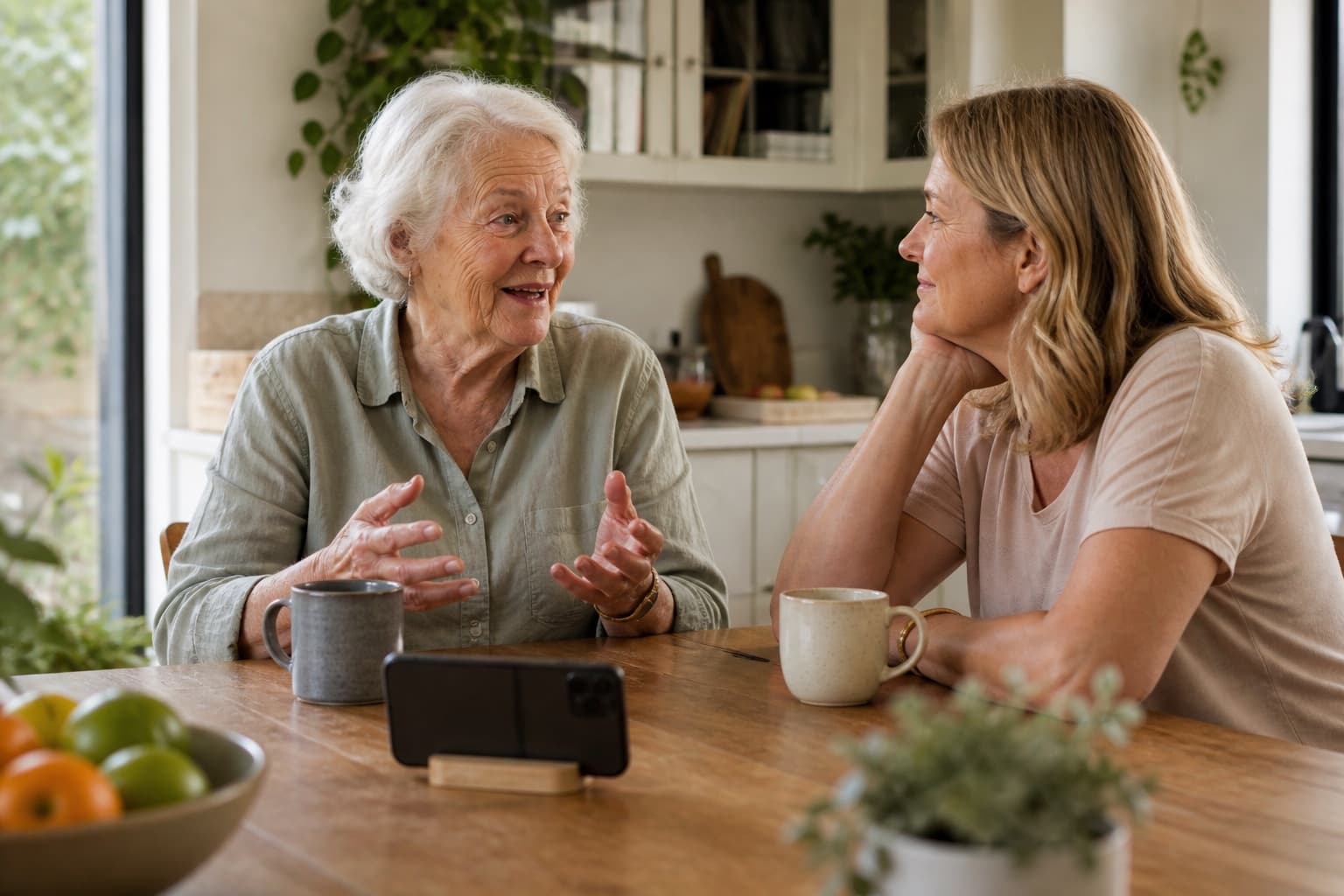
Ask Mum one small, specific question: the first kitchen she cooked in after she left home, or what she thought the day she found out she was having you. Then wait. A lifetime question gets the polished version; a scene gets her voice.
Questions only Mum can answer
These questions stay close to the parts of her life that overlap with yours: who she was before you, becoming your mum, the home you remember, work, money and the things she sees differently now. If you’re recording your grandmother instead, there’s a separate set of questions for that.
How to begin
Do not open with “tell me about your childhood”. Pick five to ten questions. Ask one, then wait. Ask for a place, a person, a smell, a sound or a small detail. Follow wherever the answer goes. A good follow-up is worth more than finishing the list. She can pause, skip, stop or decide a subject is finished.
You set it up. Mum does not need an account. Starting does not enrol Mum, and it does not consent for her. She can pause, skip or stop during the conversation. You read the memory card and approve it before the rest of the family sees it.
Who she was before you
- What was the first kitchen you cooked in after you left home? What did you make that you were proud of?
- What did a Friday night look like when you were twenty-two: where were you, who was there, what time did you get in?
- Which clothes did you think made you look grown-up, and where did you wear them?
- Who were you closest to before you had children, and what did you two do together?
- What job did you think you’d have for life, and what happened instead?
- What did your first pay packet go on?
- When were you first properly away from your family, and what do you remember of that week?
- Which song or film felt like yours, not your parents’?
When I was little
- What did the kitchen smell like on a school morning?
- What was the first thing you did after I was born that nobody photographed?
- What surprised you most about becoming a mother?
- Was there anything you worried about in my first year that I probably didn’t know about?
- What did a normal Tuesday look like when I was little, from waking up to lights out?
- Is there a small moment with me you still remember that I probably don’t?
- Is there something of mine you kept that I don’t know you still have?
- When did you first feel like a mother, not just someone looking after a baby?
Work, money, and the world while she was raising you
- What did your work day feel like when I was small: the room, the noise, the time you got home?
- How did you decide, or not get to decide, whether to stay in paid work?
- Can you remember a week when money was really tight? What did you do?
- What advice were you given about work or money that turned out to be wrong?
- When you were my age, what’s one thing from the news you still remember hearing about at home?
The hard parts, offered once, never pushed
- What was the hardest year, and how did you get through it?
- Is there a goodbye you wish you’d done differently?
- What’s something you were afraid of for years that turned out fine?
Ask gently, once. If she declines, move on and do not return to it.
Then and now
- When you were my age, what did you think your life would be like by now?
- What’s something you believed strongly at thirty that you’ve changed your mind about?
- What do you know now that you wish someone had told you at twenty?
- What are you proudest of that has nothing to do with being a mum?
What she wants remembered
- Is there a family story you think I should know that nobody tells any more?
- What’s something about the family that isn’t written down and lives only in you?
- What’s one thing you’ve never been asked that you wish someone would ask?
- If we record again next month, what would you like to talk about?
How to ask: three simple rules
One question, then silence. After she answers, wait. If you asked about the first kitchen, the second wave is often the smell of the pan, not the street name.
Ask for the senses, not the summary. “What did Tuesday morning smell like?” can unlock more than “What was it like being a mum?”
Don't fact-check her in the moment. Let her tell it as she remembers it. You can check dates later.
Before you begin, read how to record your parent's voice and stories. If a long list is what stalls you, three questions for Mum this weekend is enough to start. If you also want Nan's stories, stay with questions to ask your grandmother. If you are recording both grandparents, there is a shared starter set. If this is a present, what to get Mum when she already has everything is the gift page, and story gifts for parents who have everything explains how to offer it without making it feel like homework. If you are weighing a year-long memoir against one conversation, read the Storyworth alternative. If you want his stories too, there are questions to ask Dad. If you mean both parents, there is a shared starter set.
Frequently asked questions
How many questions should I ask Mum in one sitting?
Five to ten. A recording is a conversation, not a questionnaire. Ten answered questions with follow-ups are more useful than thirty read aloud. Save the rest for another visit.
Mum keeps giving short answers. What am I doing wrong?
Swap a lifetime question for a scene: “What did Tuesday morning look like when I started school?” A short answer might also mean she doesn’t want to go there. Give her the chance to say more, then move on.
Should I send Mum the questions first?
Share the questions beforehand if she wants them. It can help her remember people, places and stories she hasn’t thought about for years. You don’t need to follow the list once you start talking.
Is this the same as questions to ask my grandmother?
No. If you’re recording your grandmother instead, there’s a separate set of questions for that.