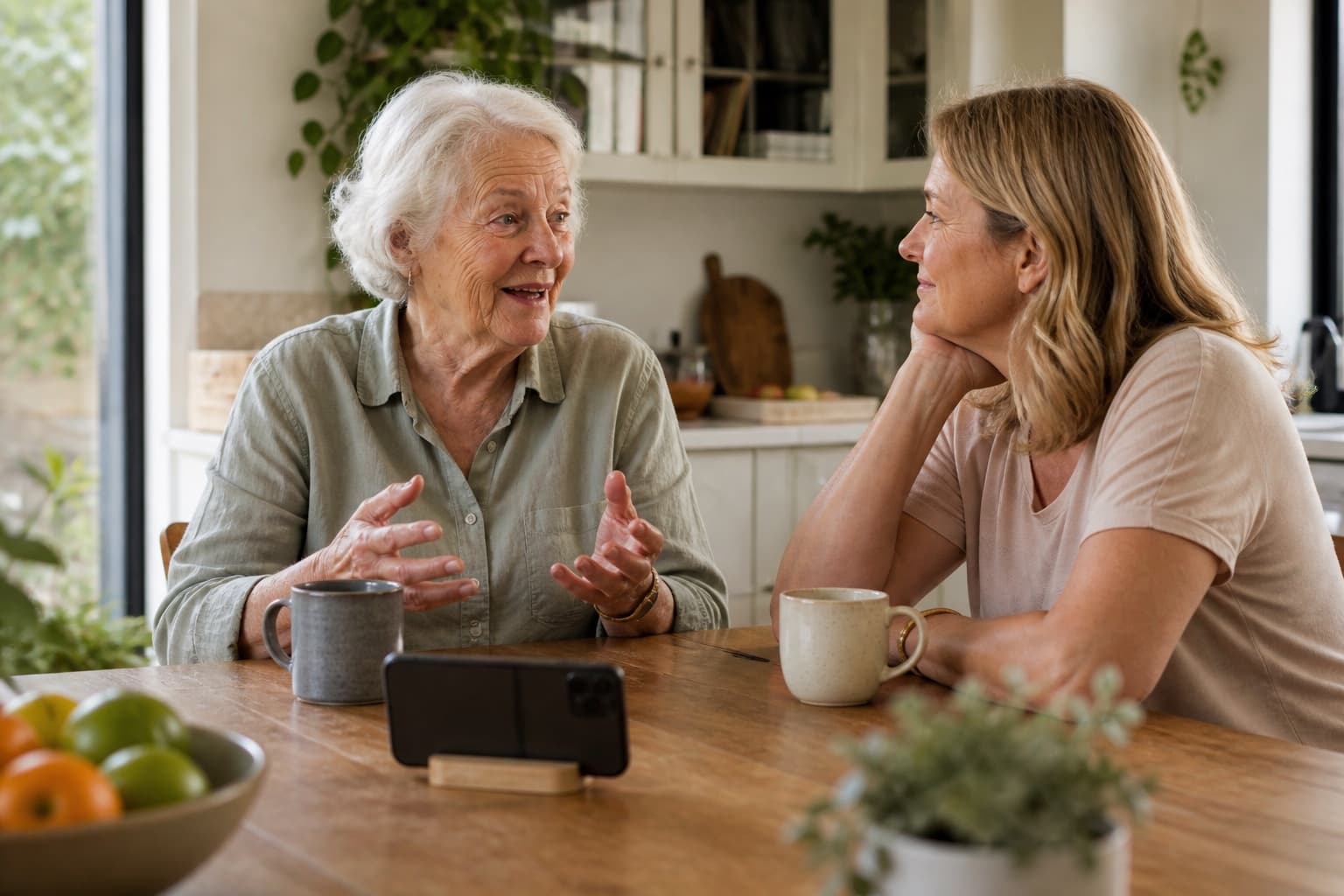
They don’t need to install anything. Call them (or set up a short Tellby phone session), put the phone on speaker while they’re already doing something ordinary, and ask one small scene question — then wait.
Why phone beats “we should sit down sometime”
“We should sit down sometime” needs a diary, a clear table, and a version of them that will sit still. That afternoon keeps not arriving. The phone is already in the house. They are already at the kettle. You do not need them to become a different person for an interview.
A sit-down puts a microphone between you. A call, on speaker, while their hands already know what to do, is a yarn. The story comes because the moment is already happening.
What you need
Three things, none of them special:
- A phone. Yours, or theirs. They do not install an app. If you are far away, you call. If you are in the kitchen with them, the same phone sits on the bench.
- A quiet-ish corner. Not a studio. The kettle and the fridge are fine. Turn the television off if you can.
- One question ready. One small scene — a kitchen, a street, a first rented room — not a lifetime.
If you want a longer list, there are questions to ask Mum and questions to ask Dad. Pick one. Leave the rest for another call. If you mean both of them, start with questions to ask your parents.
The kettle and the bench
Put the phone on speaker on the bench. They are already making tea, or standing at the sink, or waiting for the toast. You are not opposite them with a recorder. You are in the same ordinary minute they were already in.
Do not book “fifteen minutes in the diary.” Ask while the water is coming to the boil. If the answer is short, that is still a story. If it runs, follow it. Stop while they are still going.
What to say when you ask
Ask in a way that is easy to decline. Specific, small, theirs. Record only if they say yes in words.
“Mum, I'm going to put you on speaker while you make the tea. Would you tell me about the first kitchen after you left home? I'd like to keep your voice on it. You can say no.”
If you are setting up a Tellby session rather than recording the call yourself, say that plainly: one short conversation, they can stop whenever, and applying does not enrol or consent for them. You are asking permission to try, not signing them up.
If they say no, thank them and leave it. Do not turn the invitation into a campaign.
During the call
Ask one question. Then wait. Silence can feel awkward for a few seconds. What comes after the pause is often more specific than the first answer.
Ask for the senses. What did the kitchen smell like. What did the street sound like on the way home. When you hear a familiar summary, gently ask what they actually remember from that day.
Do not correct names or fill every gap. Their memory of the room matters more than making the calendar tidy.
If you are using Tellby, they can pause, skip, or stop during the conversation. Those controls stay with them in the session. You do not need to sit them down first.
After: you read it first
If you kept a voice memo yourself, give the file a name you will still understand next year — whose voice, which day, which question — and put a copy somewhere the family can find. The calm how to record your parent's voice and stories guide covers equipment, asking, and keeping the file; this page is the phone path, not a second copy of that how-to.
If you used Tellby, they can pause, skip, or stop. You read and approve before the wider family sees it. Applying does not enrol them. How Tellby works with someone's voice is the public page for those controls.
Honest tools
A voice memo on the phone you already have is enough, if they said yes. You call, they put you on speaker, you press record on your end. That is free, and it is theirs. You keep the file.
Storii is a scheduled phone product: automated calls, or they call in, on any phone, including a landline. No smartphone or internet is required to record. Calls are recorded and transcribed, and families can download an audiobook or an eBook transcript. They publish a weekly call pattern of up to three automated calls.
LifeEcho is another phone-memory service. The storyteller dials a number, or you schedule a reminder call. Any phone works — landline, mobile, or flip phone. Recordings are transcribed and stored for the family to find again.
Tell Mel is an interviewer that phones them on a schedule and turns the conversation into written chapters with the original audio. They do not install an app; answering the phone is the job.
None of these are ranked here, and this is not an affiliate page. A year of scheduled calls is a different shape from one conversation this week. If you are looking for a present rather than a phone call, the voice memoir gift page sits next to this one.
If Mum or Dad lives interstate or overseas and this call is the present, see a gift for Mum or Dad when they live far away.
Tellby's early family pilot is not a year of scheduled calls, and it is not a book. One relaxed 10–15 minute conversation becomes a private written-and-audio story card. They do not install an app. They can pause, skip, or stop. You read and approve before the wider family sees it. Applying does not enrol or consent for the parent. Read about the early family pilot if you want help with that one sitting.
Quick answers
Do they need an app?
No. They don’t need to install anything. You call them, or you set up a short Tellby session. Put the phone on speaker on the bench. Applying for the pilot does not enrol or consent for them.
How long does it need to take?
One small scene, not a sit-down in the diary. Ten minutes is plenty. Stop while they are still going. You can ring again another day.
What if they hate being recorded?
Ask in words before you record, and respect a no. During a Tellby conversation they can pause, skip, or stop. You do not need to sit them down for an interview.
Is this the same as the guide on recording your parent’s voice and stories?
No. That page is the DIY how-to: how to ask, what equipment you actually need, a quiet room. This page is the phone path — no app, speaker on the bench, one question while they’re already at the kettle.
Who sees the story afterwards?
If you keep a voice memo yourself, it stays where you saved it until you share it. If you use Tellby, they can pause, skip, or stop. You read and approve before the wider family sees it. Applying does not enrol them.